Getting a Dog Ready for the Camera
Most owners arrive at a portrait session worried about the wrong thing. They worry their dog is too hyper, too shy or too badly behaved to sit for a camera. In practice, a professional does not need an obedient dog. Photographers work with zoomies and stage fright every week, and some of the best frames come from moments nobody planned.
What actually changes the outcome is the hour before the session and the few days leading up to it. None of it is complicated, and most of it is about energy, timing and expectations rather than training.
Know What the Dog Photos Are For Before You Book
Before anything else, know where the images are going to live. A print above the fireplace, a holiday card, a gift for a family member and a set of images for social media are four different briefs, and they affect orientation, how much empty space is left around the dog, and how tightly the photographer frames.
Say it out loud at booking. If you want a horizontal shot with room for text, that is a five-second conversation before the session and an impossible fix afterwards. If the photos are heading to Instagram, it is also worth thinking early about how you want to introduce your dog to people who have never met them, because a good frame paired with a lazy afterthought of a line undersells the whole thing. A handful of captions for your dog photos picked out before the shoot will save you staring at the upload screen a week later.
Dog Photo Session Training: Two Skills That Matter
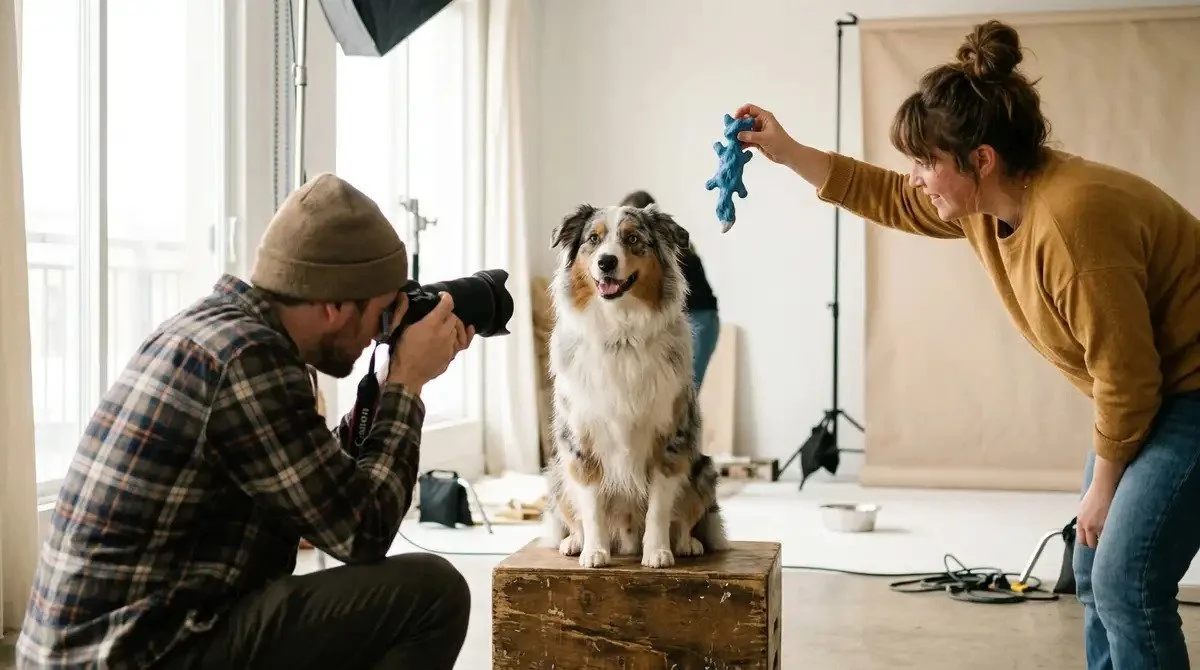
You do not need advanced obedience. Two skills carry almost every session: holding a position for a few seconds, and being comfortable taking direction from a stranger.
First, practise in a familiar room. Ask for a sit or a down, wait one or two seconds, reward while the dog is still holding the position rather than after it stands up, then use a consistent release word. Build the duration a few seconds at a time instead of jumping straight to a long stay.
For the second, have a friend run the same exercise. A dog that will do a two-second sit for you and nobody else is a dog that will ignore the photographer, and that costs real time on the day.
When to Groom a Dog Before a Photoshoot
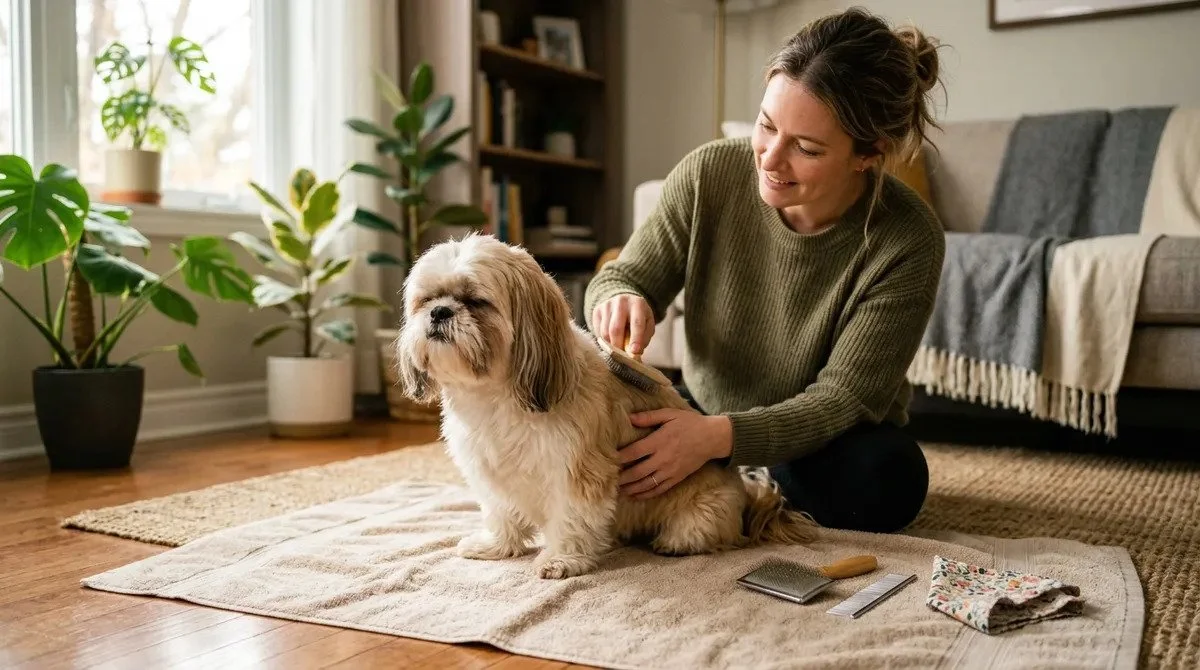
Groom a dog two to three days before a photoshoot, not on the morning of the session. Freshly groomed coats sit oddly for the first day or so, and a dog that has just been through a bath, a dryer and a stranger with clippers arrives at a photo session already spent.
Use that same window for:
Nails, which show up clearly in paw and full-body frames
The eye area, where tear staining and stray hair read badly in close portraits
Matting and tangles, which no amount of retouching fixes convincingly
A light brush on the day itself, which is all the coat actually needs
If your dog finds grooming stressful, push it back further. A week out with a calm dog beats two days out with a rattled one.
The Morning of the Session: Energy, Food and Timing
Walk or play with your dog properly before you leave. Burning off the first layer of energy makes focus and stillness much easier to get, and a slightly tired dog is a more willing dog.
Go light on food. A big meal beforehand means a treat-motivated dog stops caring about treats, extra bathroom breaks mid-session, and a dog that can genuinely look bloated in photographs. Feed a small amount, and save the appetite for the session.
Arrive about fifteen minutes early. That buffer lets your dog sniff the space, empty out, and register that nothing here is threatening. It also stops you arriving flustered, which matters more than most people realise, because dogs read stress off the other end of the leash immediately.
What to Bring to a Dog Photo Session
Pack these six things for a dog photo session:
High-value treats. Chicken, cheese or whatever your dog will break focus for, not just the everyday biscuits. Photographers burn through attention-getters fast, and a bored dog stops responding to the usual bribes.
Water and a bowl for breaks between sets.
A leash and collar, even for an off-leash location, for safety between frames.
A favourite toy, ideally a squeaky one. It is often the fastest way to get ears up and a head tilt.
Any accessory you want in the images, such as a bandana or a birthday collar. Everyday collars usually come off for portraits.
A second person. A friend who can hold and entertain the dog while the photographer sets up is the single most useful thing you can bring.
Leave behind anything your dog has not seen before. A costume or a prop introduced for the first time on the day tends to unsettle a dog rather than photograph well.
What to Wear If You Are in the Photos
Being in the photos is often the right call, particularly with a dog that sticks close to you. It gives a nervous dog somewhere safe to be, and it turns a portrait into a record of the relationship rather than just the animal.
If you are in frame, wear something you feel comfortable in and are not constantly adjusting. Avoid busy patterns and loud logos, and think about how your clothes sit against your dog's coat colour. A black outfit and a black dog merge into one shape. Most photographers are happy to advise on this before the day if you ask.
How to Keep a Dog Calm During a Portrait Session
A pet session is controlled chaos, and the good ones move at the dog's speed. Expect breaks. A few minutes of play, a drink, a sniff outside, and you get a dog that re-engages instead of one that shuts down.
If you are working in a studio, ask about the lighting before you start. Some dogs react to the sudden pop of a flash, and it is better to test that early. If your dog is clearly uneasy with it, ask whether moving outdoors is an option.
Speak up when your dog needs a pause. You know their limits and the photographer does not. The other thing worth letting go of is the picture in your head. Perfectly aligned, perfectly still, perfectly symmetrical dogs are rare, and the frames people end up printing are usually the slightly chaotic ones where the dog looks like itself.
How to Choose Which Dog Photos to Keep
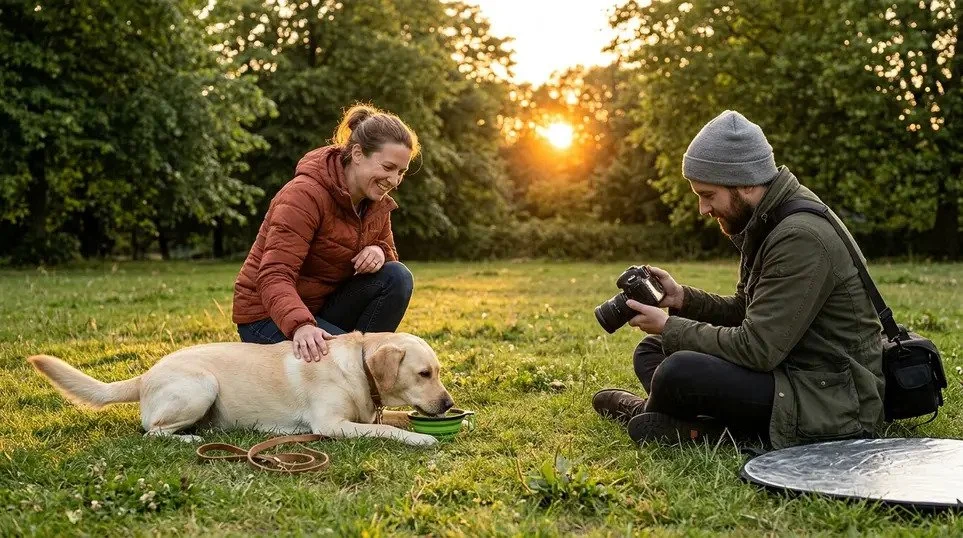
When the gallery arrives, resist the urge to pick the most technically tidy images. Choose the ones that look like your dog, including the crooked ear, the half-open mouth, the ridiculous expression that everyone in the house recognises instantly.
Pick fewer than you think you need. A set of five images that each say something different is worth more than forty near-duplicates you never get around to printing.
None of this preparation is about making your dog behave. It is about arriving with a dog that is relaxed, hungry, mildly tired and unhurried, and then getting out of the way while somebody who does this for a living does the rest.
CONCLUSION
The best dog portraits are rarely the ones where every hair is in place and the posture is pristine. They are the images that evoke an instant smile because they capture your dog's distinct spirit—the head tilt, the soulful look, or the joyful chaos. By focusing on authenticity over perfection and selecting a curated hand-full of favorites, you end up with a collection that truly honors the dog you love. Trust the process, let your pet's personality take center stage, and enjoy keeping memories that feel genuine.